
Types of Cyber Security
Explore the various types of cyber security, including network, application, cloud, and endpoint security, to protect against cyber threats.

The idea of cybersecurity has broadened to include a variety of strategies for safeguarding private information, networks, devices, and apps. The severity of cyberattacks has increased, and no single security solution can fully address all of the risks that both individuals and corporations experience. Because of this, companies are now putting several forms of cyber security into place to provide a complete defense. Each kind attacks different elements of the cybersecurity environment, guaranteeing that online dangers are prevented from every side. Building a strong and flexible security posture requires an understanding of these many types.
Implementing several types of cyber security can strengthen an organization's defenses, in my experience as a network security specialist. I've come across a variety of threats in my profession, including malware infections, phishing scams, and network breaches, all of which call for specific security solutions. To successfully combat these threats, I have worked with businesses to implement layered security techniques that integrate network, endpoint, application, and cloud security protections. To make sure that no single vulnerability could damage the integrity of the entire system, it has been crucial to know the proper combination of cyber security types to implement.
Information Security (InfoSec)
Information security, or InfoSec, focuses on protecting the confidentiality, integrity, and availability of data. This type of cybersecurity is crucial for organizations that manage large amounts of sensitive information, such as customer data, intellectual property, and financial records. InfoSec involves implementing strategies to prevent unauthorized access, disclosure, modification, and destruction of data.
Key Components:
-
Encryption: Encryption transforms data into unreadable code, ensuring that it can only be accessed by authorized parties with the correct decryption key.
-
Data Masking: Data masking hides sensitive information by replacing it with fake data, which is useful in environments like software testing.
-
Access Control: Access control limits who can view or use data, based on roles and permissions within an organization.
Application Security
Application security aims to safeguard software applications from vulnerabilities throughout their lifecycle, from development to deployment. As applications are often the target of cyberattacks, securing them is essential to prevent data breaches, unauthorized access, and other forms of exploitation.
Key Components:
-
Secure Coding: Secure coding practices reduce the likelihood of vulnerabilities like SQL injection or cross-site scripting (XSS), which attackers could exploit.
-
Penetration Testing: Penetration testing simulates attacks on applications to identify potential security flaws that need fixing.
-
Application Firewalls: Application firewalls monitor and filter application traffic to prevent unauthorized access or malicious input.
Network Security
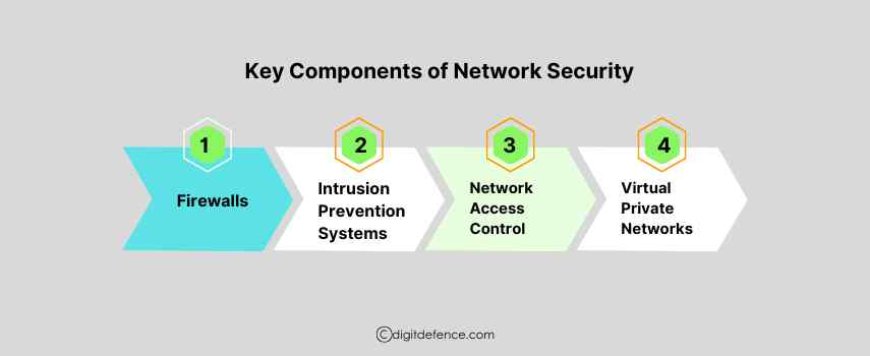
Network security is the backbone of any cybersecurity strategy. It focuses on protecting an organization’s network infrastructure by preventing unauthorized access, misuse, modification, or denial of the network and its resources. With so many devices connected to networks today, network security is critical to maintaining the integrity and usability of data within an organization.
Key Components:
-
Firewalls: Firewalls act as a barrier between a trusted internal network and untrusted external networks, filtering out unwanted traffic based on predefined security rules.
-
Intrusion Prevention Systems (IPS): An IPS monitors network traffic to detect and respond to potential threats, blocking malicious activity in real time.
-
Network Access Control (NAC): NAC restricts access to the network, ensuring that only authorized devices and users can connect.
-
Virtual Private Networks (VPNs): VPNs provide secure, encrypted connections for users accessing the network remotely, ensuring that data transmitted over the network remains private and secure.
Cloud Security
With the rapid adoption of cloud services, cloud security has become a critical type of cybersecurity focused on protecting cloud-based infrastructure, applications, and data. Cloud security measures are designed to address the unique challenges of cloud environments, such as shared resources and remote accessibility, which increase the risk of data exposure and unauthorized access.
Key Components:
-
Encryption: Encrypting data stored in the cloud ensures that even if it’s accessed by unauthorized users, they cannot read it without the decryption key.
-
Identity and Access Management (IAM): IAM tools control who can access cloud resources, using multi-factor authentication (MFA) and role-based access control to restrict access.
-
Cloud Security Policies: Organizations establish cloud security policies to govern data storage, access, and usage in cloud environments.
Endpoint Security
Endpoint security focuses on protecting individual devices such as computers, smartphones, and tablets that connect to an organization’s network. Each device, or “endpoint,” represents a potential entry point for cybercriminals, making endpoint security essential to an organization’s overall security strategy.
Key Components:
-
Antivirus Software: Antivirus programs detect and remove malicious software that may infect an endpoint device.
-
Endpoint Detection and Response (EDR): EDR solutions monitor and analyze activity on endpoint devices, identifying suspicious behavior and responding to threats in real time.
-
Mobile Device Management (MDM): MDM helps manage, monitor, and secure mobile devices in an organization, ensuring they comply with security standards.
Case Studies:
Case study 1:
In 2019, Capital One, a major financial institution in the United States, experienced a large data breach that affected over 100 million customers. The breach exposed personal data, including names, addresses, and Social Security numbers. The attacker exploited a misconfiguration in a web application firewall within Capital One’s Amazon Web Services (AWS) cloud environment. This misconfiguration allowed unauthorized access to the data stored on Capital One’s cloud servers.
Challenge
Capital One’s main challenge was the lack of proper application security and cloud security controls, specifically related to configurations in its cloud environment. The misconfigured web application firewall allowed the attacker to bypass security checks and gain access to sensitive customer data. The incident highlighted the risks associated with cloud services and application security, especially as organizations increasingly rely on cloud infrastructure.
Solution
In response to the breach, Capital One strengthened its application security and cloud security practices. The company implemented more rigorous cloud configuration checks and enhanced its application security protocols to detect and fix vulnerabilities more effectively. Capital One also adopted stricter identity and access management (IAM) policies to limit data access based on user roles and responsibilities. Additionally, the institution increased logging and monitoring of its cloud infrastructure to detect unusual activity and potential configuration changes. These measures allowed Capital One to improve its cloud and application security, reducing the likelihood of similar incidents in the future and safeguarding customer data more effectively.
Case study 2:
In 2018, Marriott International disclosed a significant data breach that affected approximately 500 million guests. The breach stemmed from a long-term intrusion into Starwood’s network (a company Marriott had acquired) starting in 2014, with attackers maintaining access to guest data for years. Sensitive information such as passport numbers, credit card details, and reservation information was exposed, creating a major reputational and operational issue for Marriott.
Challenge
The main challenges Marriott faced were network security and information security. Starwood’s network lacked sufficient segmentation, which allowed the attackers to move laterally across the system and access extensive data on Marriott’s guests. Additionally, inadequate monitoring and detection tools meant that the intrusion went undetected for an extended period. The lack of robust encryption and access controls further worsened the impact, making it easier for the attackers to extract sensitive guest data over time.
Solution
Following the breach, Marriott took comprehensive measures to improve network and information security across its systems. The company implemented network segmentation to prevent unauthorized lateral movement, ensuring that attackers would not easily access multiple parts of the network if they breached one area. Marriott also enhanced its monitoring systems with advanced threat detection tools to catch suspicious activities more quickly. Finally, Marriott strengthened its information security by encrypting sensitive data, such as passport and credit card information, and by adopting stricter access controls to limit data access to authorized personnel only. These improvements helped Marriott build a more resilient cybersecurity infrastructure to protect guest information and prevent similar breaches in the future.
cybersecurity is not a one-size-fits-all solution. By understanding and implementing various types of cyber security, organizations can build a multi-layered defense strategy that protects their networks, data, applications, cloud resources, and endpoint devices. Each type addresses a unique aspect of cybersecurity, creating a comprehensive shield against diverse and evolving cyber threats. As cyber threats continue to grow in sophistication, adopting these types of cyber security will be essential for businesses and individuals alike. In a society that prioritizes technological advancement, a robust, multidimensional strategy not only reduces risk but also guarantees long-term safety and durability.