Types of Cloud Computing Services
Understand the 3 key types of cloud computing services IaaS, PaaS, and SaaS, and unlock scalability, cost savings, and innovation for your business today!

As a cybersecurity professional, I’ve seen how cloud computing has changed how organizations manage and secure their data. The shift to the cloud isn’t just about convenience; it’s about empowering businesses with scalable, cost-effective solutions that align with their goals. Understanding the different types of cloud computing services, such as Infrastructure as a Service (IaaS), Platform as a Service (PaaS), and Software as a Service (SaaS), has been essential in helping clients secure their systems while maximizing efficiency.
When I guide businesses through their cloud journey, I emphasize the importance of choosing the right service for their needs. IaaS provides flexible control over infrastructure, PaaS simplifies the development process, and SaaS offers ready-to-use applications to enhance productivity. These services improve operations and enable businesses to focus on innovation while maintaining strong security measures to protect sensitive data in the modern threat environment.
What is Cloud Computing?
Cloud computing refers to the delivery of computing resources such as servers, storage, databases, networking, software, and more over the internet (the “cloud”). Instead of owning physical hardware or data centers, businesses can access these resources on a pay-as-you-go basis, ensuring flexibility and efficiency.
Why Cloud Computing Services Are Essential
-
Cost Efficiency: Reduces the need for expensive hardware and maintenance.
-
Scalability: Allows businesses to scale resources based on demand.
-
Accessibility: Enables remote work and real-time collaboration.
-
Disaster Recovery: Provides reliable backup and recovery options.
-
Innovation: Supports rapid deployment of applications and services.
Types of Cloud Computing Services
1. Infrastructure as a Service (IaaS)
What It Is:
IaaS provides virtualized computing resources over the internet, such as servers, storage, and networking. Businesses rent these resources on a pay-as-you-go basis.
Key Features:
-
Virtual machines (VMs), storage, and networking.
-
Highly scalable and flexible infrastructure.
-
Complete control over operating systems and applications.
Use Cases:
-
Hosting websites and applications.
-
Running data analytics and machine learning models.
-
Disaster recovery and backup solutions.
Examples:
-
Amazon Web Services (AWS): Offers Elastic Compute Cloud (EC2) for scalable computing power.
-
Microsoft Azure: Provides virtual machines and storage solutions.
-
Google Cloud Platform (GCP): Features Compute Engine for high-performance VMs.
2. Platform as a Service (PaaS)
What It Is:
PaaS delivers a platform and environment for developers to build, test, and deploy applications without worrying about the underlying infrastructure.
Key Features:
-
Includes tools for application development, database management, and middleware.
-
Supports multiple programming languages and frameworks.
-
Simplifies app development and deployment.
Use Cases:
-
Developing custom applications.
-
Automating business workflows.
-
Creating web and mobile apps.
Examples:
-
Google App Engine: A fully managed platform for building scalable applications.
-
Heroku: Simplifies app deployment with pre-configured environments.
-
Microsoft Azure App Service: Enables rapid application development and deployment.
3. Software as a Service (SaaS)
What It Is:
SaaS provides ready-to-use software applications delivered over the Internet, eliminating the need for installation or maintenance.
Key Features:
-
Subscription-based pricing models.
-
Accessible from any device with an internet connection.
-
Automatic updates and maintenance.
Use Cases:
-
Collaboration and communication tools.
-
Customer relationship management (CRM) software.
-
Accounting and productivity tools.
Examples:
-
Microsoft Office 365: Cloud-based productivity tools like Word, Excel, and PowerPoint.
-
Salesforce: A leading CRM platform for managing customer relationships.
-
Google Workspace: Includes Gmail, Google Drive, and Google Docs.
Emerging Cloud Service Models
In addition to the traditional IaaS, PaaS, and SaaS models, new service models are emerging to address specific needs:
1. Function as a Service (FaaS)
-
Also known as serverless computing, FaaS allows developers to execute code without provisioning or managing servers.
-
Examples: AWS Lambda, and Google Cloud Functions.
2. Desktop as a Service (DaaS)
-
Provides virtual desktops that users can access remotely, offering a secure and flexible workspace.
-
Examples: Amazon WorkSpaces, Citrix Virtual Apps, and Desktops.
3. Artificial Intelligence as a Service (AIaaS)
-
Delivers AI capabilities like machine learning, natural language processing, and computer vision as cloud services.
-
Examples: IBM Watson, and Google AI.
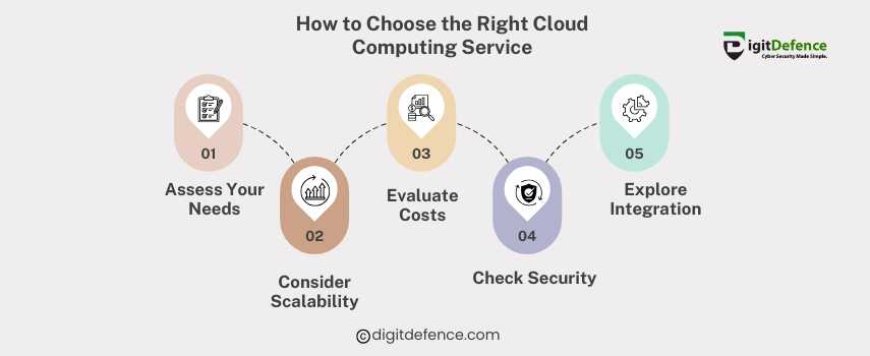
How to Choose the Right Cloud Computing Service
-
Assess Your Needs: Identify your business goals, workloads, and technical requirements.
-
Consider Scalability: Ensure the service can grow with your business.
-
Evaluate Costs: Compare pricing models and assess long-term ROI.
-
Check Security and Compliance: Confirm that the provider adheres to industry standards and regulations.
-
Explore Integration: Ensure compatibility with your existing tools and workflows.
Benefits of Cloud Computing Services
-
Cost Savings: Reduces capital expenditure on hardware and IT maintenance.
-
Flexibility: Supports remote work and real-time collaboration.
-
Innovation: Accelerates product development and deployment.
-
Reliability: Ensures uptime and availability through redundant systems.
-
Global Reach: Provides access to resources and services worldwide.
Case Study 1: Netflix's Migration to AWS
Overview:
Netflix needed a scalable and reliable solution to support its growing global user base and ensure seamless streaming, even during peak times.
Implementation:
-
Used AWS EC2 (IaaS) for dynamic resource scaling.
-
Leveraged AWS platform services (PaaS) for app development and deployment.
-
Utilized AWS tools (SaaS) for efficient data management and analytics.
Outcome:
-
Improved scalability to handle high traffic.
-
Enhanced streaming quality and reliability.
-
Streamlined operations, strengthening Netflix’s leadership in streaming.
Case Study 2: Siemens' Use of AWS for Power Plants
Overview:
Siemens faced challenges with managing numerous alerts in power plant operations, leading to inefficiencies and decision fatigue among operators.
Implementation:
-
Adopted AWS infrastructure (IaaS) for processing plant data.
-
Developed tools using AWS platform services (PaaS) to filter and prioritize alerts.
Outcome:
-
Reduced operator alert fatigue significantly.
-
Boosted operational efficiency and focus on critical tasks.
-
Improved productivity across power plant operations.
These examples show how cloud services enable businesses to overcome challenges and drive efficiency effectively.
Cloud computing services whether IaaS, PaaS, or SaaS are the backbone of modern business operations. Each type offers unique benefits tailored to different needs, from infrastructure management to application development and ready-to-use software solutions. By understanding your organization’s requirements and leveraging the right cloud services, you can drive efficiency, innovation, and growth. In a digital-first world, adopting the right cloud computing strategy is no longer optional it’s essential for staying competitive and resilient.