Top Cyber Security Services to Protect Your Business
Explore top cyber security services designed to safeguard your business from online threats, data breaches, and potential cyberattacks.
In the modern digital age, protecting my business from cyber threats has never been more essential. As a business owner, I know that every system, network, and device connected to my company’s infrastructure is a potential target for cybercriminals. The consequences of a security breach, from financial loss to damage to my company’s reputation, are far too severe to overlook. That's why I’ve made it a priority to invest in the right cybersecurity services to safeguard my business, employees, and customers.
Whether I’m dealing with sensitive client data, intellectual property, or proprietary business processes, having the right security measures in place is essential. through the top cybersecurity services, I rely on to protect my business and why each one is essential in the current climate of constantly shifting threats. From 24/7 monitoring to advanced encryption methods, these services have become the backbone of my company’s defense strategy against potential cyberattacks.
What is Cyber Security?
Cybersecurity refers to the practice of protecting computers, servers, networks, and data from digital attacks, unauthorized access, or damage. As businesses increasingly depend on digital infrastructure, cybersecurity has become an essential component of risk management. Effective cybersecurity ensures the integrity, confidentiality, and availability of critical data and systems, allowing businesses to function without disruption.
Why Is Cyber Security Important for Your Business?
-
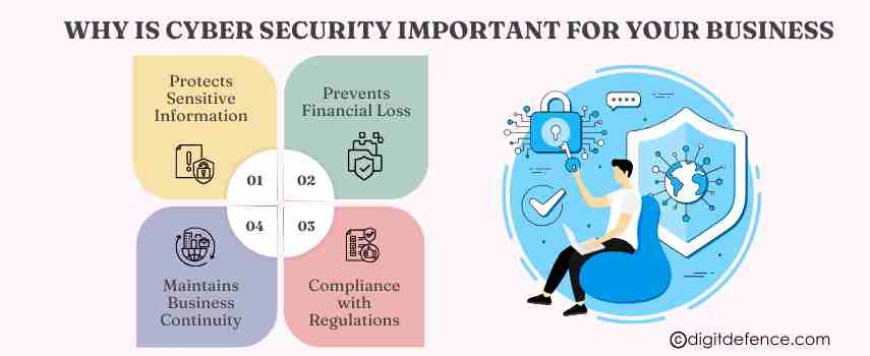
Protects Sensitive Information: Cyberattacks can lead to data breaches, exposing sensitive business and customer information. This could result in severe reputational damage, legal penalties, and loss of consumer trust.
-
Prevents Financial Loss: Cyberattacks such as ransomware and fraud can lead to significant financial losses. Preventing cyber threats helps safeguard your business's financial health.
-
Maintains Business Continuity: Cyberattacks can cause major disruptions to your business operations. A well-structured cybersecurity strategy ensures that your business can continue to operate smoothly even in the face of a potential attack.
-
Compliance with Regulations: Various industries are governed by strict data protection regulations (such as GDPR, HIPAA, or PCI-DSS). Cybersecurity helps ensure that your business complies with these regulations, avoiding costly fines and legal consequences.
Top Cyber Security Services to Protect Your Business
To protect your business from cyber threats, consider implementing the following cybersecurity services and strategies. These services are designed to help businesses mitigate risk, monitor for potential threats, and respond swiftly in case of a security breach.
1. Managed Security Services (MSSP)
Managed Security Service Providers (MSSPs) offer outsourced monitoring and management of security systems. With an MSSP, businesses can leverage a team of security experts who monitor your network for potential threats 24/7. These services often include:
-
Threat Detection & Prevention: Continuous monitoring to identify and stop cyber threats in real time.
-
Incident Response: Quick response to mitigate the impact of security breaches or attacks.
-
Security Patch Management: Ensuring that all software and systems are up to date with the latest security patches.
For businesses that lack internal cybersecurity expertise or resources, MSSPs are an effective way to maintain a high level of security without needing a dedicated in-house team.
2. Firewall Protection and Next-Gen Firewalls (NGFW)
Firewalls are a critical component of any security strategy, acting as the first line of defense between your network and the outside world. Traditional firewalls can block unauthorized access, but Next-Gen Firewalls (NGFW) offer more advanced features, such as:
-
Deep Packet Inspection: Scanning network traffic in detail to detect malicious content.
-
Intrusion Prevention: Blocking attempts to exploit vulnerabilities in your systems.
-
Application Layer Filtering: Blocking unwanted applications and controlling web access.
Firewalls, especially NGFWs, are crucial for ensuring that external and internal networks are securely isolated from cyber threats.
3. Endpoint Security
With the increasing use of mobile devices and remote work, endpoint security has become essential for businesses. Endpoint security solutions protect all devices that connect to your network, including laptops, smartphones, tablets, and desktops.
Key features of endpoint security include:
-
Antivirus & Anti-malware Protection: Detecting and eliminating viruses, malware, and ransomware.
-
Device encryption: protecting sensitive data stored on endpoints from theft.
-
Mobile Device Management (MDM): Securing and managing devices used by employees in the field.
Endpoint security is crucial for preventing cyberattacks from spreading across your network via compromised devices.
4. Security Information and Event Management (SIEM)
SIEM systems provide real-time analysis and monitoring of security alerts generated by applications, hardware, and network devices. SIEM solutions help businesses:
-
Log Management: Collect, store, and analyze security logs from various devices and systems.
-
Threat Detection: Automatically identify unusual activities or patterns that may indicate a security incident.
-
Compliance Reporting: Generate detailed reports to help businesses meet industry regulations and compliance requirements.
SIEM solutions give businesses greater visibility into their security posture, making it easier to detect and respond to security incidents promptly.
5. Data Encryption
Encryption is one of the most effective ways to protect sensitive data from unauthorized access. Whether it's data at rest (stored data) or data in transit (being transmitted over the network), encryption ensures that even if cybercriminals intercept the data, they won't be able to read it without the decryption key.
Encryption is particularly important for businesses that handle sensitive customer information, such as financial data, healthcare records, or intellectual property.
6. Penetration Testing and Vulnerability Assessments
Penetration testing (or ethical hacking) involves simulating cyberattacks on your business’s systems to identify vulnerabilities before cybercriminals do. Vulnerability assessments, on the other hand, involve systematically scanning your network for weaknesses.
Both services provide valuable insights into your organization’s security posture, helping you identify and address vulnerabilities before they can be exploited.
7. Identity and Access Management (IAM)
IAM systems help businesses control who has access to their systems and data. By implementing strong authentication protocols and enforcing strict access controls, businesses can ensure that only authorized users can access sensitive information.
Key IAM features include:
-
Multi-Factor Authentication (MFA): Requiring multiple forms of identification to verify a user’s identity.
-
Single Sign-On (SSO): Allowing users to log in once to access multiple applications securely.
-
Role-Based Access Control (RBAC): Assigning specific access privileges based on user roles.
IAM systems help prevent unauthorized access to critical business systems and sensitive data.
8. Cloud Security
As businesses continue to migrate their operations to the cloud, securing cloud-based infrastructure becomes more important. Cloud security services include:
-
Cloud Data Encryption: Encrypting data stored in the cloud to prevent unauthorized access.
-
Cloud Access Security Brokers (CASB): Enforcing security policies for cloud applications and services.
-
Cloud Security Posture Management (CSPM): Continuously monitoring cloud configurations to identify misconfigurations and vulnerabilities.
Cloud security solutions ensure that your cloud-based assets are protected from data breaches, misconfigurations, and other risks.
9. Incident Response and Disaster Recovery
In the event of a cyberattack, having an effective incident response plan and disaster recovery strategy is crucial. These services help businesses recover quickly from a breach while minimizing damage.
-
Incident Response: Providing a clear plan of action to contain and mitigate the damage of a cyberattack.
-
Disaster Recovery: Ensuring data is backed up and can be restored in the event of data loss or system failure.
-
Business Continuity Planning: ensuring that critical operations can continue even if parts of your IT infrastructure are compromised.
A strong incident response and recovery plan can significantly reduce downtime and the financial impact of a cyberattack.
Case Study 1: Sony PlayStation Network (PSN) Hack – A Wake-Up Call for Cybersecurity
Overview:
In 2011, Sony’s PlayStation Network (PSN) was hacked, exposing 77 million user accounts and compromising personal data like credit card details. The breach led to a 23-day shutdown of the network, severely affecting users and damaging Sony’s reputation.
Implementation:
To respond, Sony took several steps to enhance security:
-
Endpoint Protection: Deployed advanced security on all devices accessing PSN.
-
Network Security: Introduced intrusion detection and prevention systems to block cyberattacks.
-
Multi-Factor Authentication (MFA): Added MFA for added protection on user accounts.
Outcome:
Sony improved its security measures significantly. The breach served as a wake-up call to the industry, highlighting the need for better network security and user protection.
Case Study 2: Home Depot Data Breach – The Importance of Managed Security Services
Overview:
In 2014, Home Depot experienced a massive data breach, exposing 56 million credit card details. Hackers gained access through a third-party vendor’s compromised credentials, and malware was used to steal customer data from point-of-sale systems.
Implementation:
Home Depot took immediate action to strengthen its security:
-
Managed Security Services (MSS): Partnered with external providers for 24/7 monitoring and quick response.
-
Point-of-Sale Encryption: Encrypted card transactions to prevent future theft.
-
Vendor Security: Strengthened security protocols for third-party vendors.
Outcome:
Home Depot improved its security infrastructure, regained consumer trust, and reduced the risk of future breaches through better monitoring and encryption.
Cybersecurity is no longer an optional investment for businesses; it is a necessity. With cyber threats becoming more frequent and sophisticated, implementing a combination of these top cybersecurity services will help you protect your business from potential attacks, minimize risks, and ensure business continuity. From managed security services and firewalls to endpoint protection and incident response, there are various solutions available to match the unique needs of your business. By taking a proactive approach to cybersecurity, you can defend your organization against evolving threats, safeguard your data, and maintain the trust of your customers and stakeholders.