
Top 5 Features of Cloud Computing for Modern Business
Discover the top features of cloud computing that can transform your business operations, boost efficiency, and enhance security in today’s digital environment.

As a cybersecurity specialist, I’ve had the opportunity to help businesses enhance their digital security while utilizing modern technologies. Over the years, one of the most transformative innovations in the tech industry has been cloud computing. Businesses of all sizes, industries, and locations have embraced the features of cloud computing, leading to enhanced efficiency, scalability, and, most importantly, security. Cloud computing has proven to be a powerful tool for optimizing business operations, especially as the world continues to shift toward digital and remote environments.
Cloud computing is not just a buzzword, it’s a technological revolution that has reshaped how businesses manage data, operations, and even collaborate. By shifting from traditional, on-premise infrastructure to cloud-based systems, companies can scale their operations, streamline workflows, and improve security at a fraction of the cost. Understanding the features of cloud computing is crucial for businesses to use its full potential. Here, I will share with you the top 5 features of cloud computing that make it an indispensable tool for modern businesses and how these features can enhance overall business performance.
What is Cloud Computing?
Cloud computing refers to the delivery of computing services such as storage, processing power, networking, databases, and software over the internet, known as “the cloud.” Instead of businesses having to own and maintain their physical servers and infrastructure, they can use the cloud to rent computing resources on-demand from cloud service providers like Amazon Web Services (AWS), Microsoft Azure, and Google Cloud. These providers manage and maintain the infrastructure, ensuring businesses can scale and access their resources efficiently.
Cloud computing offers several features that make it incredibly powerful for modern businesses. By providing a flexible, scalable, and cost-effective solution, it helps organizations remain competitive, agile, and secure. Cloud solutions are available in a variety of service models, including:
-
Infrastructure as a Service (IaaS): Provides virtualized computing resources over the internet.
-
Platform as a Service (PaaS): Delivers hardware and software tools for application development.
-
Software as a Service (SaaS): Delivers software applications through the internet on a subscription basis.
Top Benefits of Cloud Computing
-
Increased Efficiency: Cloud computing automates many tasks such as software updates, data backups, and security patches, improving overall efficiency.
-
Business Agility: Cloud computing allows businesses to quickly adapt to market changes and customer needs with scalable infrastructure.
-
Global Reach: Cloud services allow businesses to expand globally by offering access to customers and employees worldwide without geographic limitations.
-
Enhanced Data Protection: Cloud services offer comprehensive backup solutions and data protection, reducing the risk of data loss.
-
Faster Time to Market: Cloud services speed up the development and deployment of applications, enabling businesses to bring products and services to market faster.
Top 5 Features of Cloud Computing for Modern Business
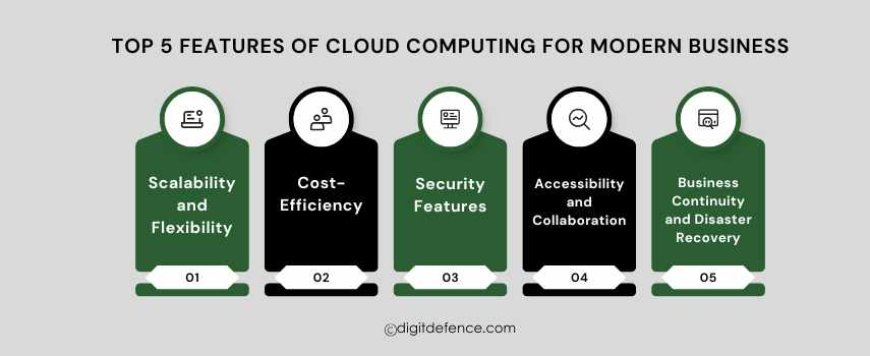
Cloud computing has revolutionized the way businesses operate, providing flexibility, scalability, and enhanced security. Here’s why cloud computing is so powerful:
-
Scalability and Flexibility
-
Cloud computing allows businesses to scale resources up or down according to demand, offering unparalleled flexibility.
-
Businesses only pay for the resources they use, ensuring cost efficiency and avoiding unnecessary investments in infrastructure.
-
Resources such as computing power, storage, and bandwidth can be quickly adjusted to meet growing needs.
-
Cost-Efficiency
-
Traditional IT infrastructure requires hefty capital investment and ongoing maintenance costs. Cloud computing operates on a pay-as-you-go model, significantly reducing overheads.
-
No need for businesses to maintain physical hardware or data centers, reducing both initial setup and operational costs.
-
Security Features
-
Cloud services come with advanced security measures like encryption, multi-factor authentication, and firewalls.
-
Providers also ensure data redundancy, keeping copies of data across multiple locations to prevent loss in case of system failures.
-
Dedicated security teams at cloud service providers manage and monitor security 24/7.
-
Accessibility and Collaboration
-
Cloud computing enables remote access to data and applications from any device with an internet connection, fostering a more flexible and mobile workforce.
-
Real-time collaboration is made possible with cloud-based tools, allowing teams across different time zones and locations to work on the same documents or projects simultaneously.
-
Business Continuity and Disaster Recovery
-
Cloud services often include disaster recovery options, with data replicated in multiple data centers. This ensures that business operations can continue even in the face of natural disasters or cyberattacks.
-
The cloud automates backup and recovery processes, ensuring quick restoration with minimal downtime.
Case Studies
Case Study1:
Netflix, the world’s leading streaming service, faced scalability challenges with its growing global user base. The company needed a more efficient way to handle its video streaming demands and content delivery.
Challenge:
Netflix needed a flexible and scalable infrastructure to ensure seamless content delivery to millions of global users without interruptions or downtime.
Solution:
Netflix transitioned from traditional on-premises infrastructure to Amazon Web Services (AWS), leveraging the scalability and flexibility offered by the cloud. By moving to the cloud, Netflix was able to scale its infrastructure up or down based on demand, ensuring that it could handle peak traffic during the release of popular new shows and movies.
Case Study2:
Dropbox, a popular cloud storage service, initially used traditional, on-premises storage solutions. However, as the company’s user base grew, it faced significant challenges with scaling its infrastructure to meet increasing storage demands.
Challenge:
Dropbox needed to find a more efficient and cost-effective solution for scaling its storage capacity while providing customers with reliable, accessible, and secure storage.
Solution:
Dropbox shifted to using cloud computing to store its data and expand its capacity. By leveraging Amazon S3 (Simple Storage Service) on AWS, Dropbox was able to integrate cloud storage into its platform, ensuring that customers could securely store and access files from anywhere.
Cloud computing is a powerful tool that offers a wide range of features that modern businesses can use to stay competitive in today’s fast-paced digital environment. From scalability and cost-efficiency to enhanced security and disaster recovery, the features of cloud computing enable businesses to optimize their operations and ensure business continuity. The flexibility and collaboration provided by the cloud also help teams work more efficiently, while the security features keep sensitive data safe from potential threats. Whether you are a small business just starting or a large enterprise looking to modernize your IT infrastructure, cloud computing provides the tools and resources needed to help you succeed. By adopting the right cloud solutions, you can boost productivity, reduce costs, enhance security, and ensure business continuity all while enjoying the benefits of a flexible, scalable infrastructure.