
The Role of VPNs in Network Security
Discover how VPNs enhance network security with encrypted connections, data privacy, and secure remote access.

Have you ever joined a coffee shop’s free Wi-Fi just to check your mail or send a quick file?
It feels harmless - you sip your coffee, scroll through your inbox, maybe even make a quick payment online.
But what if someone sitting two tables away was quietly watching your every move?
Your passwords, banking details, or private messages - all open for them to see.
That’s not a scene from a movie.
That’s how cyberattacks often begin.
Every time you connect without protection, you’re leaving your digital door unlocked.
And in a world where data is more valuable than money, that’s a dangerous mistake.
That’s where VPNs ( Virtual Private Networks ) come in.
They’re not just tools for privacy anymore.
They’re the silent bodyguards of network security.
Importance of Network Security
Your network is the heartbeat of your organization - and keeping it secure means keeping your business alive.
Network security isn’t just about firewalls or passwords. It’s about protecting what matters most - your data, your systems, and your trust.
As businesses, governments, and individuals rely more on digital connections, securing those connections has become non-negotiable.
At its core, network security stands on three pillars - confidentiality, integrity, and availability. It keeps information private, prevents tampering, and ensures your systems are always up and running when you need them.
Because in the end, a strong network doesn’t just support your operations - it protects your future.
Common Threats and Weaknesses Faced by Networks
-
Malware: Viruses, worms, and Trojan horses that aim to interfere with, harm, or obtain illegal access to systems are referred to as malware.
-
Phishing: Phishing is the term for dishonest attempts to obtain private information online by posing as a reliable source.
-
DDoS Attacks: Overwhelming Distributed Denial of Service attacks. Distributed Denial of Service (DDoS) assaults are attacks that overload network resources, preventing authorized users from accessing services.
-
Man-in-the-Middle Attacks: Attacks known as "man-in-the-middle" involve secretly intercepting and changing communications between two parties.
-
SQL Injection: Uses holes in programs to send incorrect SQL queries and manipulate databases.
-
Weak Passwords: Passwords that are simple to figure out and can be used to access systems without authorization.
-
Unpatched Software: Software that has known vulnerabilities but hasn't been updated or patched makes systems vulnerable to assaults and is known as unpatched software.
Challenges in Network Security
Securing networks has become increasingly complex, especially with the rise of cloud computing and remote work. As more employees log in from home and use personal devices, the number of access points - or potential vulnerabilities, continues to expand. This wider attack surface makes it harder for organizations to monitor and protect every endpoint effectively.
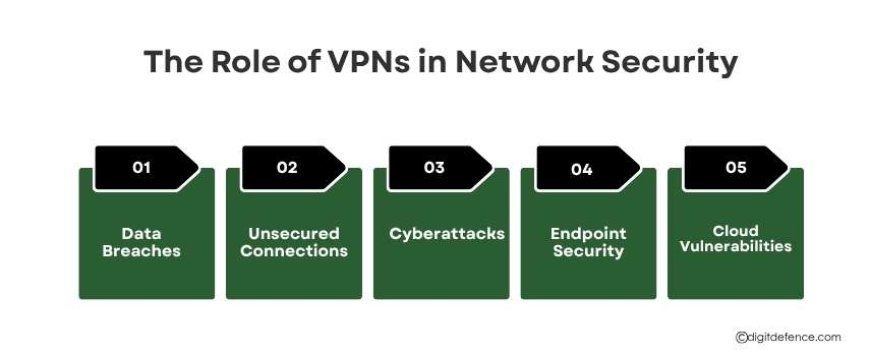
Specific challenges
-
Data Breaches: Data breaches may occur as a result of internal threats, unintentional leaks, or hacking, and they can cause serious financial and reputational harm.
-
Unsecured Connections: Cybercriminals can simply use insecure public Wi-Fi networks, which are frequently used for remote work, to intercept data and conduct attacks.
-
Cyberattacks: Cyberattacks, which target both individuals and companies, are becoming more frequent and sophisticated. Examples of these attacks include phishing, ransomware, and advanced persistent threats (APTs).
-
Endpoint Security: It is becoming increasingly difficult to make sure that every endpoint is sufficiently protected against threats due to the increase in the usage of personal devices for work.
-
Cloud Vulnerabilities: Although cloud services are flexible and scalable, they also come with concerns pertaining to access control, data privacy, and regulatory compliance.
How Can VPNs Enhance Network Security?
Virtual Private Networks (VPNs) offer a safe and encrypted internet connection between a user's device and the target network, which is vital for improving network security. The following is how VPNs improve network security:
-
Data Encryption: By encrypting data being sent over the internet, VPNs prevent unauthorized parties from reading it. This guarantees that the data cannot be decrypted without the encryption key, even in the event that it is intercepted.
-
Secure Remote Access: VPNs provide secure remote access, allowing employees who work remotely from any location to securely connect to their company's network. In the era of remote work, where employees frequently access sensitive data from multiple locations and networks, this is especially crucial.
-
Anonymity and Privacy: By hiding the user's IP address, VPNs improve anonymity and make it more difficult for internet criminals to follow their movements or identify their location.
-
Overcoming Restriction and Geo-limitations: VPNs enable users to safely and carefully access resources that are banned by overcoming internet censorship and geographic limitations.
-
Protection when Using Public Wi-Fi: Cyberattacks can be launched from public Wi-Fi networks, which are frequently vulnerable. VPNs offer an extra degree of protection, shielding user data from possible dangers on these networks.
-
Decreased Risk of Man-in-the-Middle Attacks: VPNs guard against man-in-the-middle attacks, in which a third party intercepts and may modify communication between two parties, by encrypting data and authenticating connections.
-
Secure Communications for Remote Offices: Virtual private networks, or VPNs, can link distant offices to the main business network in a secure manner, guaranteeing the security of any data transferred between them.
-
Enhanced Security for IoT Devices: To guard against potential vulnerabilities and attacks on IoT devices, VPNs can be used to secure connections between these devices and central systems.
The Role of Virtual Private Networks (VPNs) in Strengthening Security
Every time you connect online, your data takes a journey - and without protection, anyone could be watching.
That’s where Virtual Private Networks (VPNs) step in. They act like a secure tunnel between your device and the internet, keeping everything you send and receive locked away from prying eyes. Even if someone tries to intercept your connection, the encrypted data stays unreadable.
VPNs do more than just hide your information - they also hide you. By masking your IP address, VPNs add another layer of privacy, making your digital identity harder to trace.
For companies with remote employees, VPNs are a game-changer. They allow teams to safely log into company systems, share files, and access data from anywhere — all without putting sensitive information at risk.
Network security is no longer just a technical concern - it’s a business necessity. As organizations handle increasing amounts of sensitive data and depend more on remote access and cloud platforms, the risks grow significantly. This is where VPNs prove their true value.
In short, adopting a VPN isn’t just about security - it’s about building a safer, smarter, and more adaptable digital foundation for your business. In a world where every connection matters, making VPNs part of your network security strategy is one of the most reliable steps toward long-term protection.