Why Businesses Must Do a Security Audit in Cyber Security
Learn why every business needs a Security Audit in Cyber Security to stop threats, stay compliant, and protect customer trust.
Can your business afford to lose customer data? What would happen if hackers gained access to your systems today?
A single cyberattack can disrupt operations, expose sensitive data, and harm brand reputation. Beyond immediate financial impact, companies may also face compliance challenges and loss of customer trust. For small and mid-sized businesses, the consequences can be even more severe.
A security audit in cybersecurity helps prevent such risks by identifying vulnerabilities, strengthening defenses, and ensuring systems remain secure and compliant.
Cybercrime is expected to cost the world ₹925.78 trillion (Cybersecurity Ventures).
Nearly 60% of small businesses shut down within six months of a cyberattack (National Cyber Security Alliance). More than 70% of organizations fail initial compliance audits due to weak controls (IBM Report).

What Is a Security Audit in Cyber Security?
A security audit in cybersecurity is a systematic review of an organization’s IT infrastructure, policies, and processes to find vulnerabilities and ensure compliance with industry standards. Think of it as a comprehensive “health check” for your digital systems.
It’s not just about finding flaws; it’s about understanding risks, improving strength, and ensuring your business is ready to survive online attacks. This type of cybersecurity audit ensures your systems remain resilient against ever-changing threats.
How Security Audit in Cyber Security Works
A security audit is not just a technical process; it’s a business safeguard. It systematically evaluates your company’s IT infrastructure, policies, and practices to ensure that no weak link can be exploited by attackers.
-
Defining Scope and Objectives
The audit begins by identifying what needs to be evaluated: networks, applications, data storage, access controls, and compliance requirements. Businesses can decide whether the focus is on internal risks, external threats, or both.
-
Data Collection and Review
Auditors gather system logs, review configurations, and interview IT staff to understand how data flows within the organization. This step ensures that the IT security auditing process is based on accurate, real-time information.
-
Risk Identification
Auditors check for outdated software, misconfigured systems, weak authentication methods, and data handling gaps. These issues, if left unaddressed, can become entry points for cybercriminals.
-
Testing Security Controls
The audit team simulates real-world attack scenarios to test existing defenses. This includes checking firewalls, intrusion detection systems, encryption methods, and access privileges.
-
Gap Analysis and Compliance Check
Every business must meet industry standards such as ISO 27001, PCI DSS, or HIPAA. The audit in information security highlights compliance gaps that could result in fines, legal issues, or loss of client trust.
Types of Security Audits Businesses Should Know
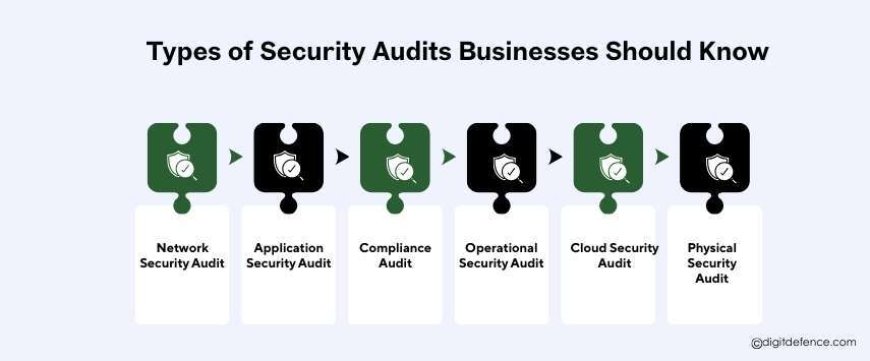
Not all audits are the same; each type of cybersecurity audit addresses a different layer of protection.
-
Network Security Audit
This audit checks the strength of your company’s network infrastructure, including firewalls, routers, and servers. It identifies unauthorized access points and ensures that communication channels are secure.
-
Application Security Audit
Every business depends on web and mobile applications. An application security audit looks for coding flaws, authentication issues, and potential backdoors in software. It is particularly important for e-commerce, fintech, and SaaS businesses where applications handle customer transactions and data.
-
Compliance Audit
Compliance audits ensure that your business meets industry regulations like ISO 27001, PCI DSS, HIPAA, or GDPR. Failing to comply can lead to heavy fines and reputational loss. For companies in healthcare, finance, or retail, this type of audit in information security is not optional, it’s mandatory.
-
Operational Security Audit
This type reviews internal policies, employee practices, and access control mechanisms. Weak employee passwords or a lack of training can make even the best technology ineffective. Businesses benefit by strengthening both people and process aspects of security.
-
Cloud Security Audit
With businesses quickly shifting to cloud-based systems, a cloud security audit checks the safety of data storage, encryption, and vendor compliance. It ensures your cloud provider meets international security standards and that your data isn’t exposed to risks.
-
Physical Security Audit
Cybersecurity isn’t just digital. A security audit of physical assets examines how well your business protects on-site resources like servers, data centers, and workstations. It ensures that unauthorized individuals cannot gain physical access to critical systems.
Why Businesses Must Do Security Audit in Cyber Security
With cyberattacks becoming more advanced every year, regular security audits provide a structured way to identify risks before attackers exploit them.
Key Reasons Businesses Must Do Security Audits:
-
Protect Sensitive Data – Prevent data breaches that could expose customer information, financial records, or intellectual property.
-
Ensure Regulatory Compliance – Meet industry requirements like GDPR, HIPAA, and PCI DSS to avoid penalties and legal consequences.
-
Build Customer Trust – Show clients and partners that your business takes security seriously and values data protection.
-
Identify Weaknesses Early – Spot vulnerabilities such as outdated systems, misconfigurations, or human errors before they turn into costly breaches.
-
Reduce Financial Risks – Cyberattacks can lead to revenue loss, downtime, and expensive recovery costs. Audits minimize these risks.
-
Strengthen Business Continuity – Ensure systems remain resilient against disruptions, protecting operations and productivity.
How Often Should Businesses Conduct a Security Audit?
The frequency of a security audit in cybersecurity depends on the size of the business, the industry it operates in, and the sensitivity of the data it handles.
-
At Least Once a Year – Most businesses should schedule a full cyber security audit annually to maintain compliance and overall security hygiene.
-
Every 6 Months for High-Risk Industries – Sectors like banking, healthcare, and e-commerce deal with sensitive data and should perform audits more frequently.
-
After Major System Changes – Any time a business updates infrastructure, migrates to the cloud, or deploys new applications, an IT security auditing process should follow.
-
Post-Security Incident – If a breach, phishing attack, or malware incident occurs, a follow-up audit in information security ensures that gaps are identified and corrected.
-
Quarterly Internal Reviews – Alongside formal audits, businesses should conduct internal mini-audits to maintain ongoing security.
Challenges Businesses Face Without Security Audits
Without regular cyber security audits, organizations often overlook hidden vulnerabilities that attackers exploit.
-
Unnoticed Vulnerabilities – Outdated software, weak passwords, and misconfigurations remain unchecked, giving hackers easy entry points.
-
Regulatory Non-Compliance – Failure to meet standards like GDPR, HIPAA, or PCI DSS can lead to heavy fines and legal issues.
-
Higher Risk of Data Breaches – Without IT security auditing, businesses lack visibility into gaps that lead to data theft and financial losses.
-
Reputational Damage – Customers lose trust in brands that fail to secure sensitive data, which directly impacts sales and partnerships.
-
Operational Downtime – Security incidents cause system disruptions, affecting productivity and revenue.
-
Reactive, Not Proactive Security – Businesses end up responding to attacks after they occur instead of preventing them.
Future of Security Audit in Cyber Security
Audits are no longer limited to basic checklist evaluations; they are becoming smarter, automated, and continuous.
-
Automation & AI Integration
AI-driven tools will speed up vulnerability detection and risk analysis. Automated scans will reduce human error and provide real-time insights.
-
Continuous Auditing
Instead of yearly reviews, businesses will shift toward ongoing monitoring. Continuous audit in information security ensures threats are identified and addressed instantly.
-
Cloud Security Audits
With businesses migrating to the cloud, audits will focus on misconfigurations, data access policies, and shared responsibility models.
-
Zero Trust Frameworks
Audits will increasingly test compliance with Zero Trust principles, ensuring no user or device is trusted by default.
-
Compliance-Driven Audits
Regulations such as GDPR, HIPAA, and PCI DSS will continue to prompt businesses to conduct regular, comprehensive IT security auditing.
-
Blockchain for Audit Trails
Blockchain technology will enhance transparency and accountability in audit logs, making them tamper-proof.
Today, cyber threats are growing fast, and every business is at risk. A security audit in cybersecurity helps companies identify weak points, address them promptly, and remain protected from attacks. It also shows customers and partners that your business is serious about protecting data.
Doing regular cyber security audits means you are not waiting for problems to happen, you are preventing them before they cause damage. This saves money, keeps systems running, and builds trust.
Don’t wait for a cyberattack to harm your business. Get a security audit in cybersecurity from experts and protect your data, systems, and reputation.